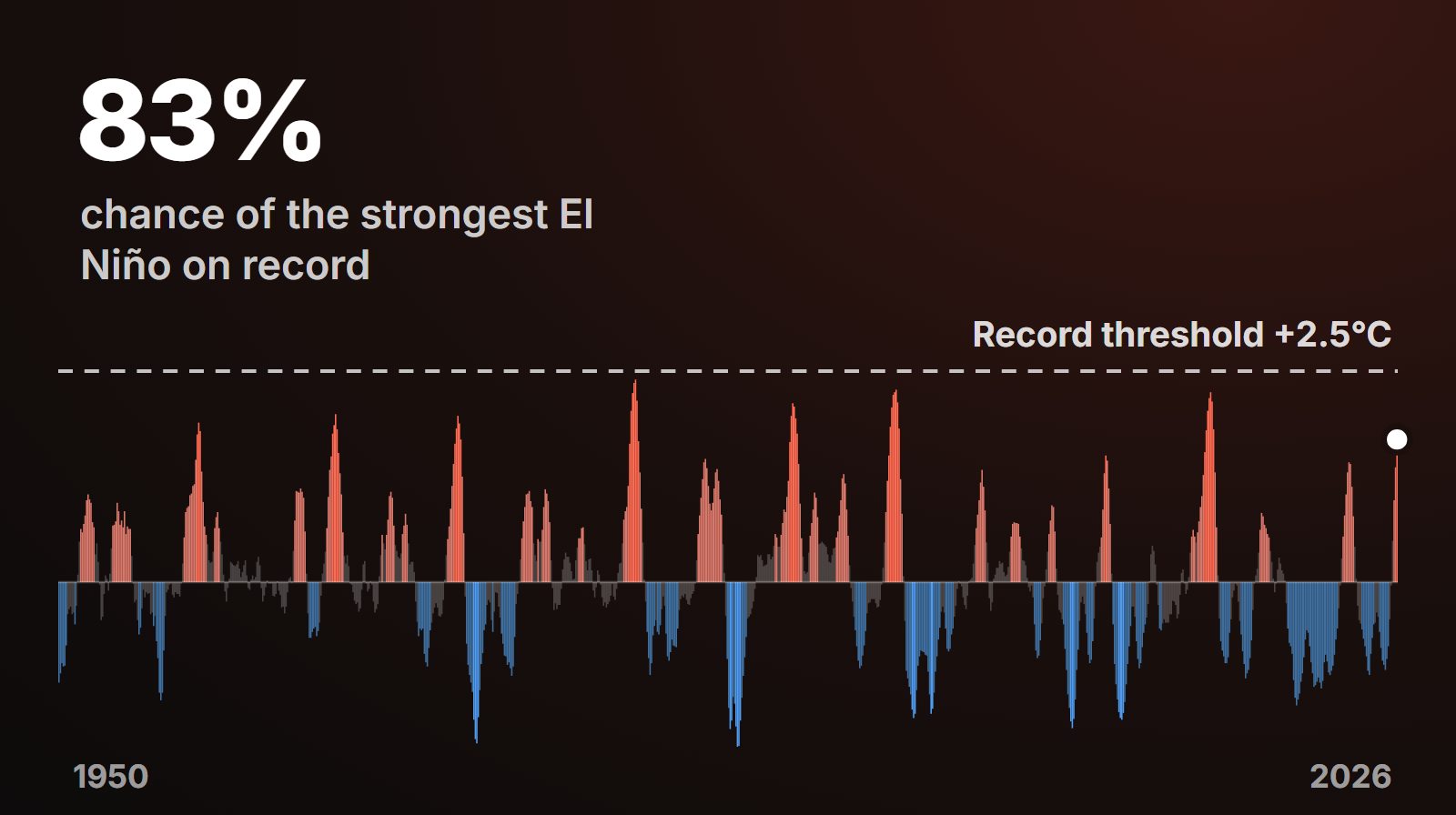
Pack 1 · Geography, Science
El Niño: reading 76 years of ocean data
Compare the strongest El Niño events, calculate how fast 2026 strengthened, and explain why 2027 could be the warmest year on record.
- 50–60 min
- Graphs
- Rates of change
- Probability
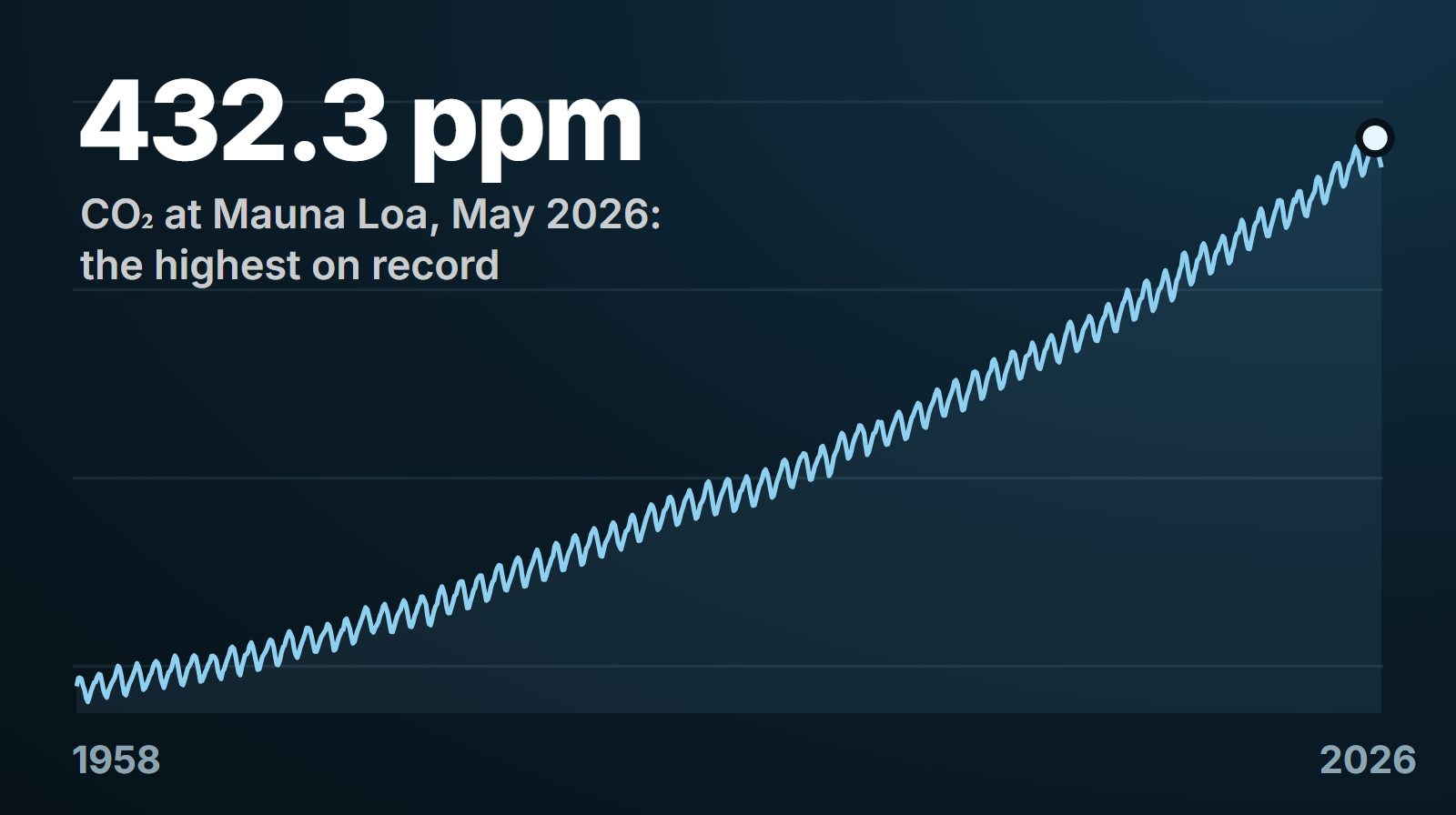
Pack 2 · Science, Geography
Earth’s vital signs: carbon, warming and the energy turning point
Work with the Keeling curve and world electricity data, then judge whether the world is making progress on climate change.
- 50–60 min
- Percentages
- Carbon cycle
- Energy
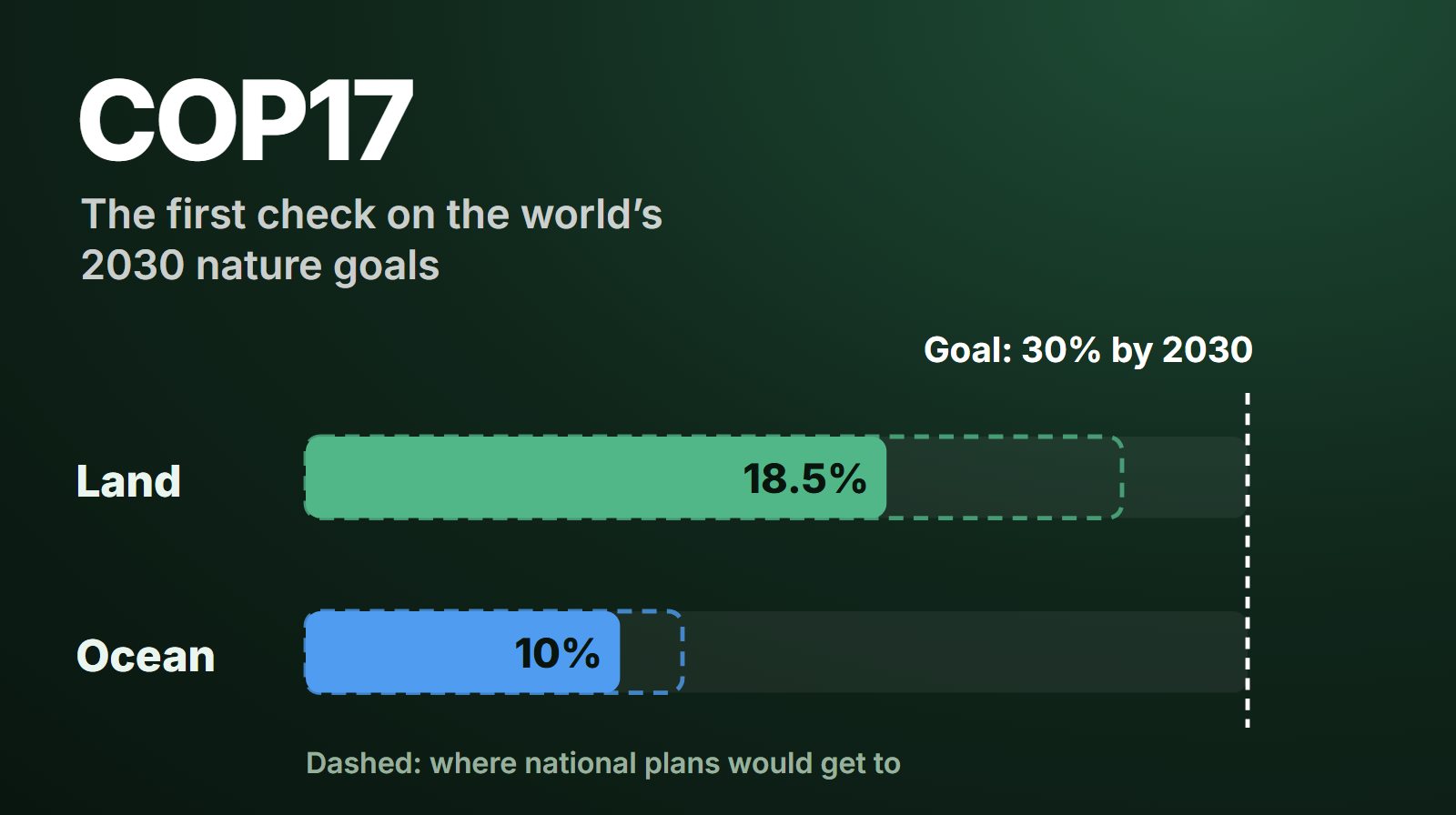
Pack 3 · Geography, Biology, Citizenship
Protecting nature: is the world on track for 2030?
Read the UN’s biodiversity report card, calculate the pace needed for 30 by 30, and debate who should pay to protect nature.
- 50–60 min
- Targets
- Global governance
- Debate
How the packs work
Every pack follows the same structure, so students get used to the routine of reading real data.
Open it on screen or print itCharts are interactive in class: hover or tap for exact values. “Print or save as PDF” gives a clean A4 worksheet with answer lines.
Teach with the answers“Show answers and teacher notes” reveals worked answers, a levelled mark scheme for the six-mark question, common misconceptions and differentiation ideas.
Go further with the dataEach pack links to a CSV download for spreadsheet work and to the full news analysis, with every figure sourced to NOAA, Copernicus, the UN and others.
More for the classroom
Free tools that work well as starters, homework or extension tasks.
Weekly climate quizTen questions on the week’s environment news, each answer explained. A ready-made starter.
Earth’s Vital SignsTwelve live indicators, from CO₂ to Arctic ice. Students can check how the numbers have changed since a lesson.
ClimateIQ PersonalA UAE-specific carbon footprint calculator that uses a real DEWA or SEWA bill. Ideal homework.
The UAE in numbersInteractive charts on the UAE’s emissions, heat, water and energy for local case studies.
Using Greenly charts in your own slides? Every chart in Greenly’s news analysis has an “Embed” button that gives you code for a live, interactive version, free to use with credit. The packs are written for students aged 13–16 and suit Geography, Science and Citizenship lessons in British, IB and American curriculum schools; they are not tied to a specific exam board, so adapt the mark schemes to your own. Ideas or a topic you would like covered? Get in touch.